Thursday, 20 March 2014

The Puppet

I used wire to create the basic armature for the puppet. It stands about 6" tall as it is meant to be a short character who is jealous of Barbera's height.
The design of the character is based loosely on the paddington bear puppet with influence from Tim Burton's animations. The design choice came about as in my previous animation project: 'Being fr the Benefit of Mr. Kite!' (abandoned) the characters were initially inspired by the artistic style of Nick Park and Aardman Animations but I decided to alter them by using fabric to produce certain clothing, like coats or scarves - eventually some characters consisted entirely of material clothing with plasticine used only for flesh.

The plasticine I used was Newplast, I used this as it is a high quality product and is highly reliable. It is not too oily and therefore gives a matte look and is easy to animate. It is also the sole brand used by Aardman animations among many other industry professionals.

Unlike other puppets I've made, I produced this one completely naked and built the costume up around it.
The costume is a pinstripe suit, recycled from an old pinstripe skirt and the shirt is made from curtain material. I made four different shapes for the shirt and glued them onto the torso. The trousers are sewn, I made the two legs longer than the legs of the puppet to emphasise his lack of height. The trousers were glued to the back and hidden under the shirt. The blazer was also sewn, the edges were glued to save time but the shoulders and arms were joined with needle and thread. Once dressed, the character looked convincing.

Thursday, 13 March 2014

Set Update


 Since the initial design for the set, I have made some changes. Though I still want the animation to take place on a street; I want to make it a completely white street.

This comes after seeing the sets used in the original Paddington Bear series, where they would be completely white (presumably made from foam-board or card) to save time and money.

I think that having a plain white set with only the minor details such as windows and doors to be drawn with pen and ink is a much better idea than trying to replicate an actual street using printed cartridge paper and cardboard cutouts. I think this because not only will it be a direct reference to Paddington Bear, but it will also be a lot cheaper to produce and it will be more aesthetically pleasing.

I am making the set from cardboard with sheets of thick A4 paper stuck on using strong sticky-back tape (like what they used to tell you to use in Blue Peter all the time). Measurements for windows and doors are marked out thinly with a pencil and then drawn on with pen. The windowsill and doorstep are made using cardboard cutouts with the edges drawn in pen also, this gives them a shadow which in turn gives the set more depth.

The details are drawn roughly and with crude lines with little care for neatness, itself reminiscent of the artwork by Tim Burton and low budget cartoons of the 1960s-90s.

The Main action I wanted to take place on some steps outside the house. The steps were made from a thin cardboard with paper stuck to the alternate side where the measurements were marked out. They were held together with masking tape and glued on the inside with hot glue, the result is better than I expected as I took my time particularly on the stairs.

The door is made with a thicker cardboard, I cut the indents with a scalpel and glued paper to the back to make it 3D. The handle consisted of two cardboard pieces which were carefully cut to scale. All the edges were drawn with pen so as not to make it out of place with the rest of the set.

Five additional smaller houses were made and glued to cardboard boxes, the smaller houses give a forced perspective making the street look larger than it actually is.

To the main houses I have added three extra windows on the second level and I added a roof also


Thursday, 6 March 2014

Animation Background

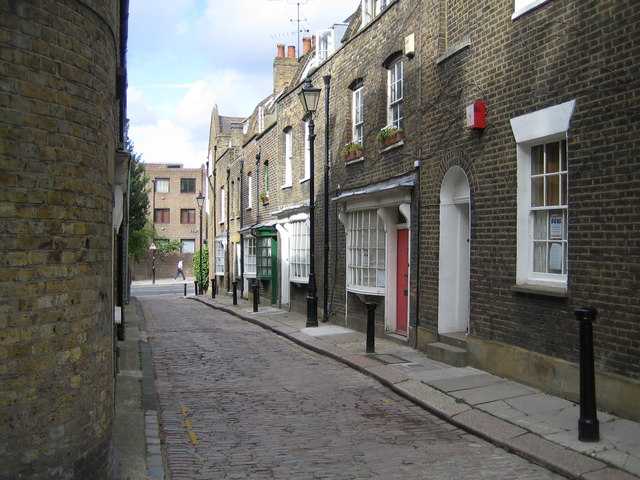
I want the street set to look similar to this
I wanted the character to be begging from the street so I drew a sketch of how I wanted it to look with plans of the materials I need and the size of the set parts. I think if I do the animation at home rather than in-college, I can easily control the lighting and will have more control over the storage of the plasticine character and the set. I also have a large collection of props and set pieces from previous animations, along with additional characters I can use in the background and can use to make the set larger.

Thursday, 27 February 2014

Animation Idea

My Ideas

I want to animate 'Barbara,' an impression my brother does about someone who gets locked out of her home and begs for the love of Barbara. I plan to animate this with claymation as I have made dozens of plasticine models in the past and spent 3 years planning on a claymation series (until I scrapped it). The animation would take place on a street, outside a front-door. It would be 30-60 seconds in length and would feature only a voice recording of the Barbara impression as performed by my brother. The character would be produced much in the style of the Wallace and Gromit characters (to draw a similarity, as I will be using my own artistic style) - the mouth replacements would be based on Rex the Runt as this would be easier and quicker to use.


My second idea would be to animate a section from a podcast / radio show / stand-up performance, much the way that Chris Salt does with Lego. I would either animate this with Claymation or Lego - I could animate a section of the Adam and Joe podcast or a part of an Eddie Izzard performance, like the famous Lego Star Wars Canteen sketch.

Alternately, I would like to try cut-out animation and produce a sketch somewhat similar to Terry Gilliam's from the 60s, 70s and 80s - though I would prefer to use plasticine as I have had more experience using it.

Thursday, 13 February 2014

Stop Motion Animation

This is my blog on the history of stop motion animation, it ranges from the earliest forms of animation, through it's developments in the 20th century to the present day. It features different forms of Stop Motion including; pixilation (the use of human puppets in animation), Time-Lapse, Cell and Claymation.

The Persistance of Vision

The persistance of vision is the rate at which the brain perceives motion.
For the human brain, the persistance of vision is 12 frames per second (though the typical video is 24fps or more - which fools the audience into believing the movie is real).

Wednesday, 5 February 2014

Cutout Animation

The first major movie animations were produced by Lotte Reiniger, she used a technique called cutout animation which used cutout character torsos with separate limbs which were arranged and animated in much the way stop-motion is: by taking a photograph each frame and moving the cutouts to emulate motion.
Many 60s-70s children's cartoons were animated with cutouts: Mary Mungo and Midge, Crystal Tips and Alistair as well as the original series of Captain Pugwash and Sir Prancelot, not forgetting Ivor the Engine or Noggin the Nogg.

Terry Gilliam

When I think of cutout animation, I think of Terry Gilliam. The famous movie director and comedian started out producing cutout animations for Do Not Adjust Your Set after previously working on photo strips for Help! magazine. Working on the show he began on what would be the early blueprint for the Monty Python Cartoons which he worked on while also writing and acting in the live action sketches. Monty Python was formed from a small number of comedians which had worked on Do Not Adjust Your Set and I'm Sorry I'll Read It Again. The group produced the television show: Monty Python's Flying Circus as well as four movies and a small number of live shows when the group occasionally reformed.
Gilliam's animations are well known for their use of old stock imagery, usually recoloured and often embellished by cutting images out and sticking them to others or redrawing certain parts - much the way that Cyriak does now. The use of stock imagery combined with Gilliam's own drawing work provided the surreal look the show was themed upon. It also allowed for an easy and quick method of animation which in turn added to the smoothness and surreal element of the show; for instance, an entire scene could be animated in such a way that it blends perfectly into the next live action scene.
Although Gilliam no longer produces cutout animations, references to his early work crop up all around, in one of his recent films: the Imaginarium of Dr. Parnassus; a huge similarity can be made to his cartoons, most notably in the Jude Law dream sequence - which features dancing policemen in skirts, a giant policeman's head, and lots of Russians running under the dress of a giant old lady who's head comes off to reveal she is actually a machine being operated by the devil.

South Park

Having been inspired by Gilliam, Trey Parker and Matt Stone created South Park. Though the original sketches and pilot episode were created using traditional cutout stop motion techniques, the programme is actually animated digitally. The use of digital animation is much quicker to that of stop motion and despite being made digitally, it still retains the image of a cutout animation.
The series started in 1997 and is still ongoing with a huge fan following, though it's jokes are often controversial and in many cases offensive.